
Comparative Philosophical Frameworks for the Anthropocene: Integrating Ken Wilber and Alasdair MacIntyre in an Age of Polycrisis
What did the Universe think before there were H. Sapiens?

Welcome back. Lately, I have been reflecting on whether it is possible to retain moral values in various cultures, as values, ethics, and understandings of what constitutes the good life are foundational to any society. While international law confronts new challenges, the spread of US American values raises questions about sustainability, posterity, and the negative impacts US cultural values have on the world. Are there better ways to manage our affairs? My central question is: Can we achieve shared values to regain community and a sense of what matters most? I find no single answer from the many sources I have explored. Instead of seeking an absolute answer to a complex problem, I sustain my desire to understand my world by learning from the thought processes of inquiring minds like Ken Wilber and Alasdair MacIntyre, whose approaches can help us engage productively with these ongoing challenges. I don’t agree with everything they propose, but I like the way they think.
One more caveat: Models, images, rhetorical flourishing, and knowing what’s what won’t change things. The deepest levels of change happen culturally, and culture evolves in many strange ways that are hardly under anyone’s control. One can’t just come up with a brilliant plan and expect the world to get with the program.
COSPOLON: Cosmos, Polis, Solon. Culture works from the outside in and from the inside out and develops through family, friends, and close community. Culture can also be hijacked.
Are you familiar with MacIntyre and Wilber? What do you think about their approaches to their concerns? Please let me know in the comments.
Introduction: The Metacrisis and the Turn Toward Planetary Stewardship
Modern civilization faces a complex, multi-dimensional emergency defined by overlapping global disruptions, including climate change, geopolitical instability, economic inequality, and technological acceleration. Beneath these challenges lies a deeper, historically specific threat to truth, beauty, and goodness: the metacrisis. The metacrisis describes a significant collective failure in humanity’s understanding, valuation, and relationship to reality. Originally coined by Edgar Morin and Anne Brigitte Kern in 1999 and later developed by contemporary thinkers, this crisis marks a transitional phase between the decline of modern structures and an uncertain future for civilization. The awareness of this crisis sets the stage for considering how humans might navigate such dramatic change.
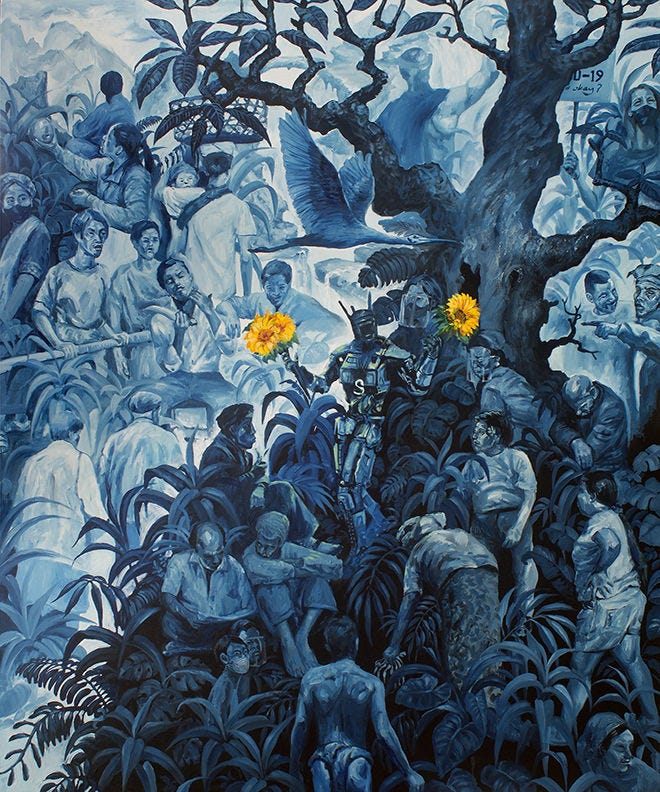
The transition, sometimes termed the Second Renaissance, demands a fundamental revision of how the human species conceptualizes its place within broader life systems. However, as global institutions and mainstream communication networks remain slow to recognize the urgency—preferring established, business-as-usual frameworks—contemporary philosophy is compelled to respond. Consequently, new paradigms of integration are being sought. Let’s look back a bit, as it happens, these challenges are not new. To help us envision a resilient path forward (less pain), I will synthesize the developmental, evolutionary framework of Ken Wilber’s Integral Theory with the historically grounded, community-focused virtue ethics of Alasdair MacIntyre.
While these two thinkers are often positioned at odds—with Wilber representing a modernist, evolutionary trajectory and MacIntyre offering a historicist, neo-Aristotelian critique of modernity—their concepts nevertheless present complementary responses to the present crisis of perception, while imagining a synthesis of their approaches, I engage with their foundational texts, including A Theory of Everything and After Virtue, and examine contemporary movements such as Speculative Realism and Object-Oriented Ontology. Through this analysis, I consider how humanity might transcend anthropocentric isolation and foster a custodial, compassionate stewardship of the biosphere’s complex, evolving systems. (One can dream.)
Nothing can prevent us from imagining a better way. We will, however, have to address our predicament through community activism sooner rather than later. Either that or sit back and watch global civilization collapse until the consequences literally hit home. We have watched this mess develop for generations. It’s time to take care of business.
It’s fascinating to me that even though Wilber’s work caught on in mainstream institutions, the desired results never materialized. Why would it? Biophysical reality says we can’t save capitalism with positive psychology. Aristotelianism and Thomism are how old now?
When there are five thousand people left on Earth, what aspirations will K-species H. sapiens have?
Intellectual Lineages and Contextual Origins
To understand where Wilber and MacIntyre differ and where they converge, one must first examine the distinct backgrounds and influences that shaped their central ideas.
Alasdair Chalmers MacIntyre, born in Glasgow, Scotland, in 1929, experienced a formative tension between two value systems: the traditional Gaelic oral culture of farmers, fishermen, and storytellers, and the modern urban world marked by abstract theories rather than narratives. Educated in classics at Queen Mary College, London, MacIntyre developed a solidarity with the working classes and began an intellectual journey through British New Left politics, Marxist Protestantism, a period of atheism during the 1960s and 1970s, and eventually, a conversion to Aristotelianism and Thomism.
Throughout his journey, MacIntyre sought a clear ethical system that could logically reject phenomena like Stalinism without resorting to the disconnected moral ideas of liberal individualism. His famous book, After Virtue (1981), and later Dependent Rational Animals (1999), both show his effort to ground practical reason in the basic and vulnerable nature of humans and animals. Turning now to Wilber’s contrasting intellectual journey, we see a different context emerge.
In contrast, Kenneth Earl Wilber Jr., born in 1949, developed his framework within the context of late twentieth-century American transpersonal psychology and the humanistic movements of the West Coast. Unlike MacIntyre, who rooted his work in ethical traditions and historical narrative, Wilber sought a comprehensive world philosophy that could weave together the pluralistic contexts of empirical science, developmental psychology, Western philosophy, and Eastern mystical traditions.

Starting with Up From Eden (1981) and later with Sex, Ecology, Spirituality (1995) and A Theory of Everything (2000), Wilber developed a model of both human and cosmic growth. In his later work, Wilber sought to describe spiritual states and growth as views arising from real-life practices rather than timeless metaphysical levels.
The Metaphysical Architectures: Quadrants versus Tradition-Bound Teleology
The primary structural divergence between Wilber and MacIntyre lies in their basic metaphysical architectures. On one hand, Wilber’s Kosmology organizes the patterned whole of existence into an all-inclusive framework. In contrast, MacIntyre’s teleological framework focuses on the historically situated, socially embodied development of human agency.
Ken Wilber’s Quadrantic Kosmos and Developmental Waves
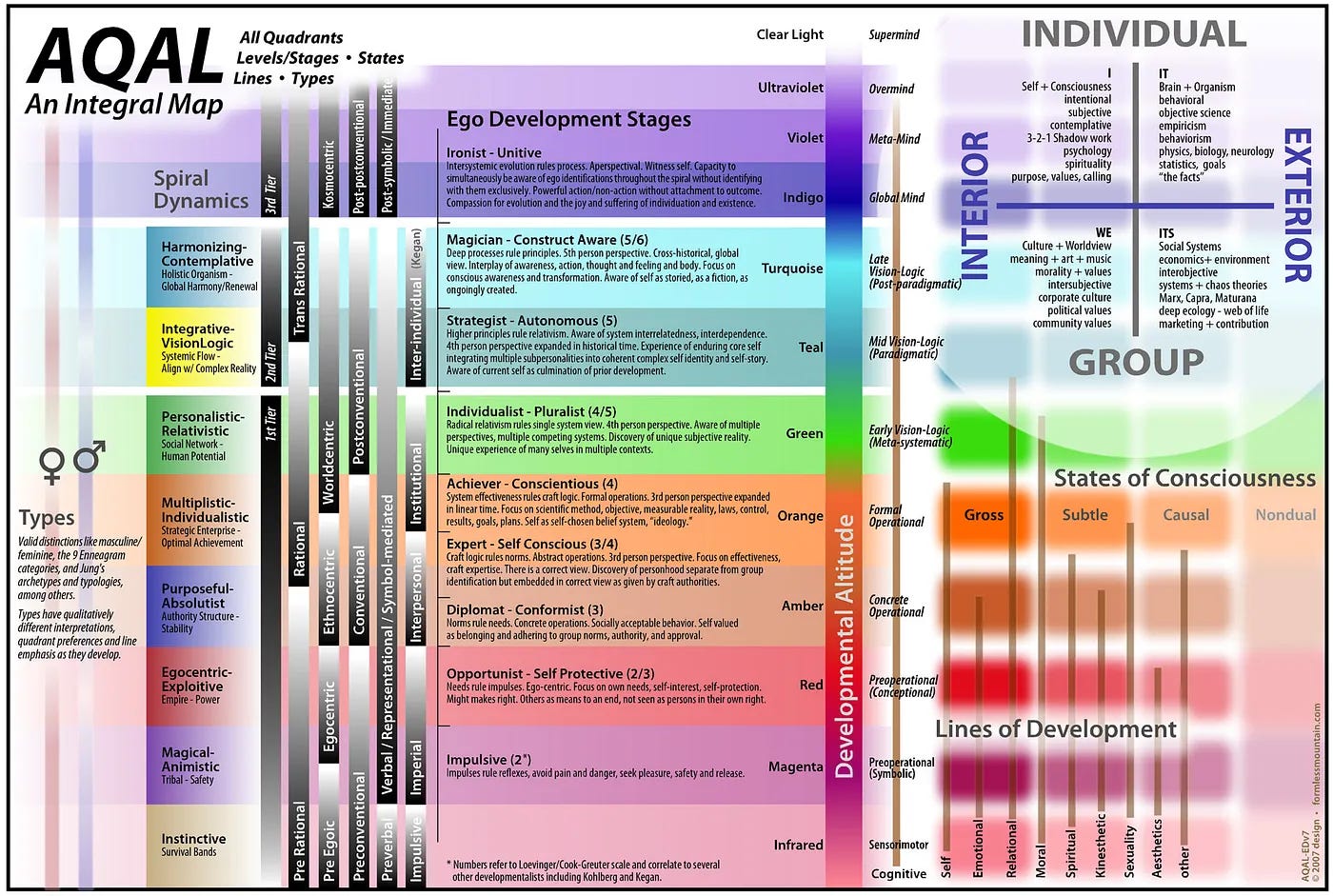
Wilber’s All Quadrants, All Levels (AQAL) framework presents human knowledge and experience in a four-part grid based on the inside-outside and individual-group dimensions. In this model, everything (or “holon”) has four parts: the personal inside (Upper-Left), the personal outside (Upper-Right), the group inside (Lower-Left), and the group outside (Lower-Right).
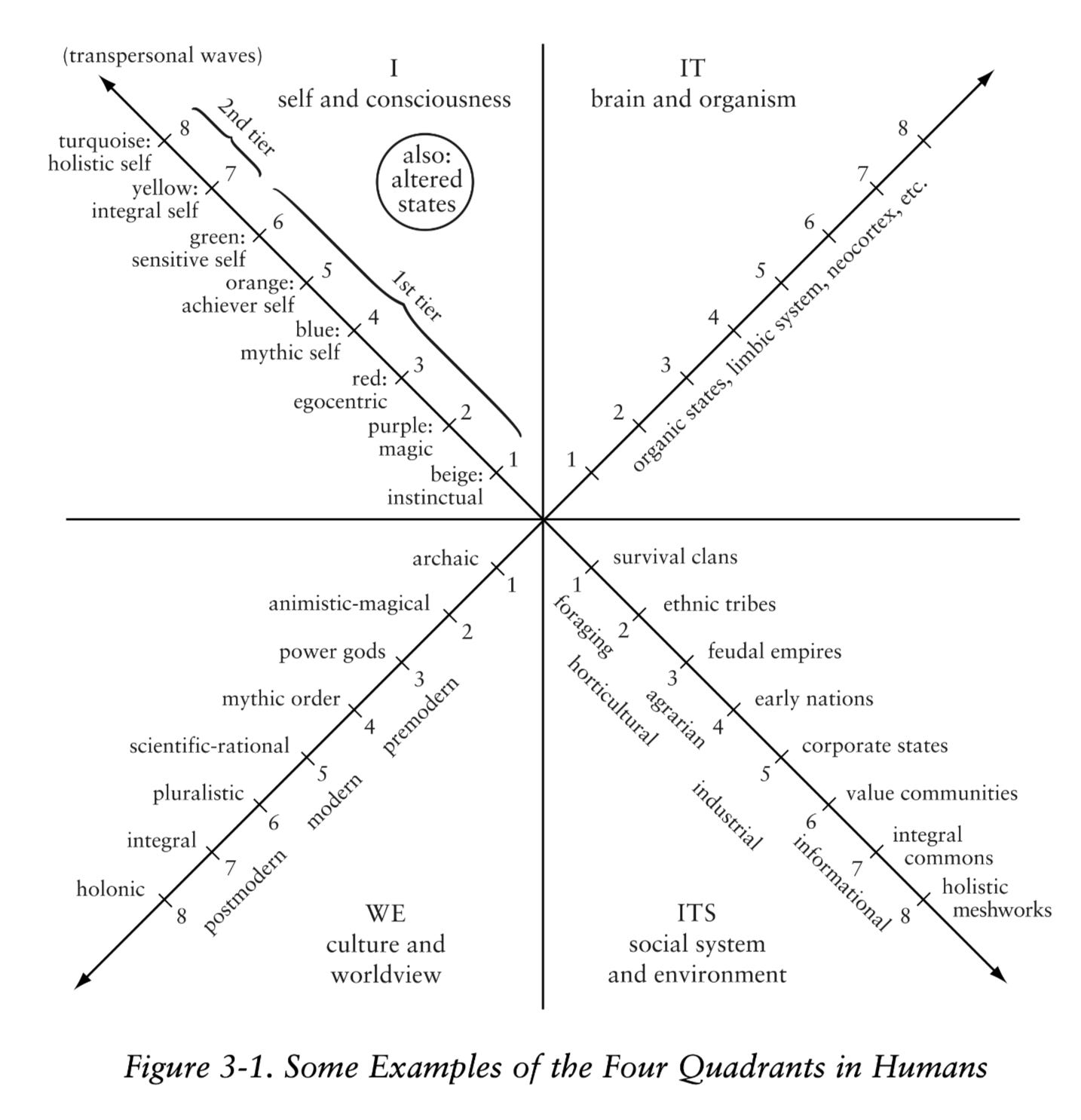
Building on the foundational structure of the AQAL framework described above, evolution, in Wilber’s view, proceeds vertically through these quadrants as a nested progression of developmental levels or waves. Drawing upon the developmental psychology of Clare Graves and the subsequent Spiral Dynamics model of Don Beck and Christopher Cowan, Wilber maps human cultural and psychological evolution through a series of color-coded developmental memes. These stages are characterized by a steady decrease in egocentrism and a corresponding increase in consciousness and care.

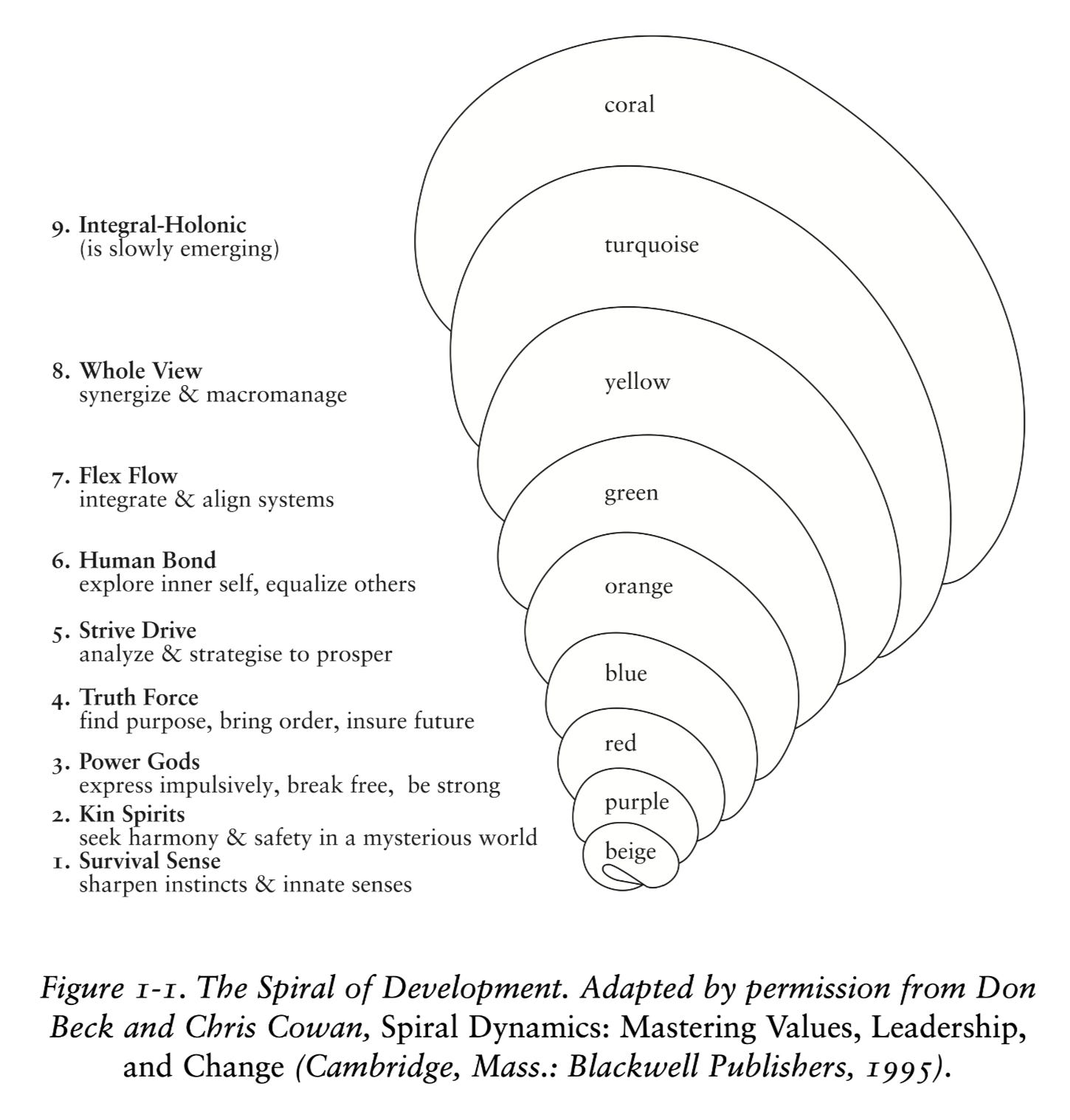
According to Wilber, humanity has, on average, evolved to the rational-egoic and pluralistic levels, but the persistent challenge remains the vertical transformation of individuals from egocentric (Beige to Red) and ethnocentric (Blue) worldviews toward worldcentric (Green and Teal) consciousness.
I would like to see us evolve into cultures that place primary value on virtue and living systems, rather than on materialism and consumerism.
Alasdair MacIntyre’s Narrative and Teleological Ecology
MacIntyre’s framework offers a historicist view that contrasts with the broad claims of modern developmental psychology. In After Virtue, he says that modern Western moral ideas have lost clarity because the historical and social contexts that once made them clear are no longer present.
Historically, this coherence was maintained by a threefold Aristotelian schema:
Untutored Human Nature: Describes humans in their original, instinctual state.
Man-as-He-Could-Be-If-He-Realized-His-Telos: Represents the ideal of human flourishing attained through the cultivation of virtues.
Moral Precepts: Refers to the rules and practices that guide the transition from untutored nature to realized telos.
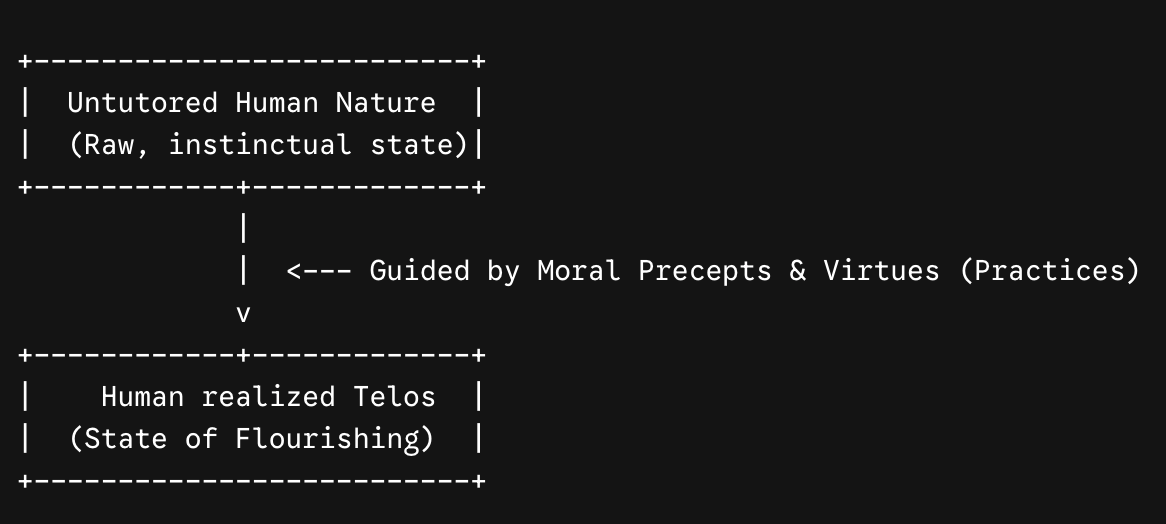
When the Enlightenment rejected teleology, it produced a fragmented framework: on the one hand, descriptive facts about untutored human nature; on the other, prescriptive moral rules. Without a shared conception of human flourishing, these moral rules lost their rational foundation, giving rise to modern emotivism, in which moral debates become contests of subjective personal preference.
Modern emotivism is a meta-ethical theory asserting that moral statements are not objective facts but rather expressions of personal emotions or attitudes. Often colloquially known as the "boo-yay theory," it suggests saying "murder is wrong" is equivalent to exclaiming "boo to murder" and possesses no inherent truth value.
To address this fragmentation and restore moral rationality, MacIntyre grounds the virtues in socially established, cooperative practices (such as farming, music, or science). A virtue, in this sense, is an acquired human quality that enables individuals to achieve “goods internal” to a practice, which can only be derived by accepting its internal standards of excellence.
Building on this account of practices and virtues, MacIntyre further develops his argument in Dependent Rational Animals by transitioning from a purely sociological teleology to an explicitly biological one. He asserts that human beings are fundamentally vulnerable, dependent animals, and that the virtues we need to develop into independent rational agents are the same virtues we need to respond to disability and dependence in ourselves and others.
The Human-Independent Universe: Speculative Realism and the Envisioning of Great Nature
A central question arising from this comparison concerns the status of the physical universe independent of human perception: what might the universe be without humans interpreting it through their unique perspective?
Quentin Meillassoux and the Paradox of the Arche-Fossil
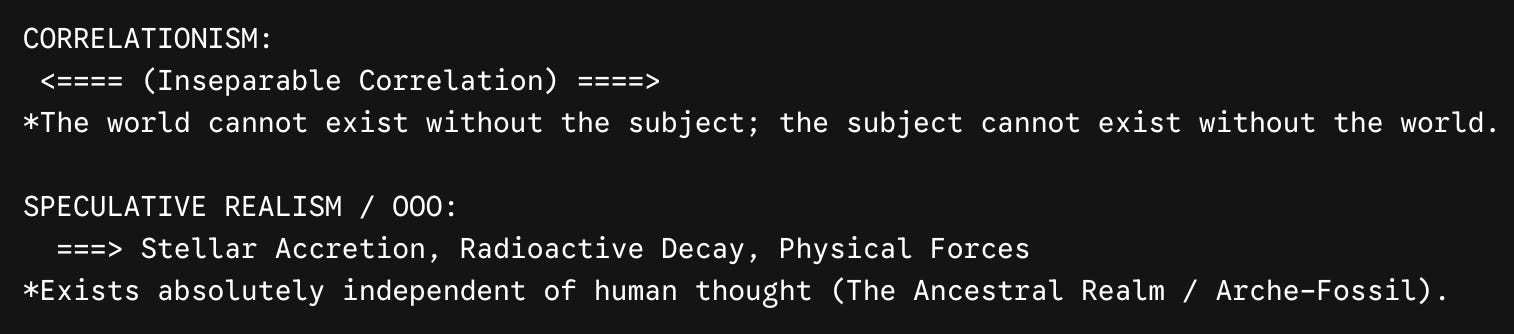
In contemporary continental philosophy, this question is systematically addressed by Quentin Meillassoux through his critique of correlationism. Meillassoux defines correlationism as the post-Kantian assumption that we can never access the world (in-itself) independent of human thought, or thought independent of the world.
To expose the flaw in this correlationist circle, Meillassoux presents the paradox of the arche-fossil or ancestrality. Ancestrality refers to scientific statements about reality prior to the emergence of human life or organic life altogether.
The temporal anteriority of the physical universe can be mathematically modeled. Let the relationship between reality and the human cognitive subject equipped with sensory and cognitive capacities be defined as:



where

denotes the correlationist field of human access. If reality is strictly identical to this correlation, then at any ancestral time before the emergence of subjects, there is no world:





Yet, experimental science routinely asserts that ancestral events—such as the accretion of the Earth a billion years ago—actually occurred. The correlationist must argue that these ancestral statements are merely retroactive projections constructed by the modern mind in the present.
Meillassoux rejects this defense, asserting that an ancestral statement is meaningful if and only if its literal, realist sense is its ultimate sense. He proposes a mathematical realism in which the primary properties of an object, when formulated mathematically, exist independently of any relation to a perceiving subject.

Jim Rutt recently passed away due to brain cancer. He is missed. I loved his smile and his way of thinking things through.
Object-Oriented Ontology and Great Nature
Graham Harman’s Object-Oriented Ontology (OOO) offers a radical alternative by proposing a flat ontology. OOO rejects the traditional philosophical practice of privileging human consciousness over nonhuman beings.
Instead, it maintains that all objects—whether human bodies, quasars, slime molds, or plastic bags—exist on an equal ontological footing. Within this framework, objects are considered “withdrawn” from direct access; thus, no relation, human or nonhuman, can ever fully exhaust the reality of an object.
This flat ontology stands in direct opposition to any overmining of the natural world, which would treat physical objects as mere effects of language games, human intentions, or economic forces. Instead, OOO asserts that objects interact through a process of vicarious causation, in which their real, withdrawn essences never directly touch but relate only through the mediation of sensual qualities.
This philosophical perspective aligns with Iain Hamilton Grant’s conception of “nature as subject.” In other words, nature possesses an unconditional, self-generating, and self-productive autonomy that unfolds entirely independent of human cognition.
Speculative Envisioning of an Uninhabited Universe
If we strain our imagination to envision a wondrous universe entirely uninhabited by our species, we uncover a vast, silent expanse. Here, physical forces, cosmic events, and thermodynamic flows self-organize. For billions of years before Homo sapiens arrived, stellar accretion disks formed, atomic fission occurred, and physical laws operated, all without a human observer. As far as we know, H. sapiens is the only species in the universe with our particular consciousness and ways of interpreting our world.
In light of this perspective, in this disanthropic reality, the universe is not a sterile mechanism but a highly dynamic web of relations in which objects continuously affect one another on an equal ontological footing.
Building on this understanding, acknowledging this radical independence forces humanity to confront its own profound impermanence. Our species’ history is a brief, recent emergence within a vast morphogenetic field of potentials.
Consequently, this realization de-centers human subjectivity. It exposes the arrogance of treating the biosphere as a passive resource designed solely for human utility. To move forward, our ethical frameworks must recognize this cosmic independence. We must transition from anthropocentric command-and-control strategies toward a custodial, loving stewardship of the complex, self-generating systems of which we are part.
Epistemological Paradigms and Colliding Standards
Both Wilber and MacIntyre are heavily influenced by the philosopher of science Thomas S. Kuhn, using his concepts of “paradigms” and “scientific revolutions” to construct their respective frameworks of inquiry. However, while they share this foundation, they diverge sharply on how to resolve conflicts when different evaluation standards collide.
Wilber’s Post-Metaphysical Paradigms
For Wilber, especially in his later post-metaphysical phase, what does a paradigm mean to you? Rather than an abstract mental model, Wilber defines a paradigm as a concrete set of practices that enact and reveal new phenomena. Imagine being told, “If you want to know this, you must perform this experiment.”
Wilber’s broad conception of science expands on this perspective. He includes not only narrow physical experiments, but also systematic, replicable practices such as logic, mathematics, hermeneutics, and contemplative meditation.
So when different enactive paradigms generate conflicting worldviews, Wilber’s metatheoretical approach is twofold: he preserves the replicable experiences enacted by each paradigm, yet discards their underlying metaphysical interpretations—except to the extent that those experiences integrate into the comprehensive AQAL framework.
MacIntyre’s Tradition-Bound Rationality
In contrast, MacIntyre argues that different traditions of moral inquiry cannot normally be reconciled. The reason: the standards used to evaluate and resolve moral claims are strictly internal to each tradition. Whereas Kuhn argued that scientific paradigms rarely coexist—one dominant framework ruling until a crisis occurs—MacIntyre points out something different. In the modern West, he observes, the coexistence of different, fragmented traditions of moral inquiry makes irreconcilable moral disagreement inevitable.
In addition, MacIntyre holds that individuals remain effectively trapped within their own traditions of inquiry unless an “epistemological crisis” occurs. A tradition resolves such a crisis and proves its rational superiority over a rival not by appealing to a universal, neutral framework, but by constructing a superior historical narrative.
In this account, the narrative must explain both its own achievements and its rival’s limitations from the inside, demonstrating its ability to solve the systemic problems that its rival cannot even conceptualize.
Critical Appraisals and Conceptual Blind Spots
To establish a rigorous synthesis of Wilber and MacIntyre, one must systematically evaluate the academic criticisms and structural blind spots identified by their respective critics. I must also read or reread the sources that inspire their work. Who has the time?
Caveats and Critiques of Ken Wilber
Wilber’s ambitious “theory of everything” has sparked significant debate. How would you respond to critiques from academic philosophers, systems theorists, and developmental psychologists?
Have you ever wondered whether focusing only on our inner world misses half the picture? Systems theorist Mark Edwards thinks so. He critiques Wilber’s tendency to focus on Left-Hand (interior) consciousness, treating it as the main source of depth and relegating the Right-Hand (exterior) sciences to a “flatland” of mere behaviors. Drawing on social research, Edwards shows that development is more dynamic and reciprocal than Wilber suggests, arguing that this imbalance limits Integral Theory’s power to address social and political complexities.
Does rigorous evidence support Wilber’s sweeping claims? Extending these concerns about Wilber’s comprehensive approach, another major critique addresses methodological and scholarly overreach. In Bald Ambition: A Critique of Ken Wilber’s Theory of Everything, Jeff Meyerhoff examines Wilber’s scholarly sources in detail. Meyerhoff argues that Wilber’s reliance on “orienting generalizations” frequently leads him to misrepresent or ignore primary academic research, forcing complex historical, sociological, and psychological data into his pre-established evolutionary model. As Andrew P. Smith notes, while some prominent scholars like Charles Taylor have spoken favorably of Wilber, Meyerhoff’s detailed source-checking carries considerable weight, demonstrating that Wilber’s grand synthesis often oversimplifies academic consensus.

During the many years that I have been familiar with Ken Wilber's writings, I have often wondered what a trained academic philosopher would make of them. While a few of them, such as Charles Taylor, have spoken favorably of Ken, most seem to have remained silent. With Bald Ambition, we finally have a detailed answer to this question. Though Jeff Meyerhoff is apparently not a professional philosopher, I think the quality of his ideas as well as their presentation is up to academic standards, and I'm quite sure that many academic philosophers would agree with much of what he says....[and/or]...Whatever Wilber might think of Bald Ambition, if he actually took the trouble to read it, he could not honestly argue, as he does so often with his other online critics, that Meyerhoff misrepresents his views. Meyerhoff has not simply pored over many of Wilber's twenty or so books, but unlike most other Wilber critics, has taken the trouble to check out many of Wilber's original sources. Thus when he turns the table and accuses Ken of misrepresenting or ignoring other thinkers, Meyerhoff's point carries considerable weight." -Andrew P. Smith, Ph.D., author of The Dimensions of Experience In clear and lively prose, Bald Ambition summarizes and analyzes Ken Wilber's arguments for his theory of everything, and investigates his scholarly sources. Areas that Wilber integrates into his theory-such as psychology, mysticism, philosophy, methodology, social evolution, Western history, postmodernism, and systems theory-are examined. In addition, an original argument explaining the relationship between psychology and belief is described, and a penetrating analysis of the connections between Ken Wilber's psychology and beliefs is offered as an illustration of Meyerhoff's theory.
Adding to methodological criticisms, further objections target the underlying structure of Wilber’s holon theory. Criticisms from Andrew P. Smith indicate that Wilber’s foundational concept of the Kosmos as an unbroken hierarchy of nested holons is structurally flawed. Smith points out that physical entities, such as free-floating interstellar atoms, exist independently without being nested within larger biological or social wholes, challenging the absolute universality of Wilber’s nested hierarchy.
Finally, commentators highlight conspicuous absences in Wilber’s work. They note that while Wilber draws extensively from South Asian (Indian) traditions of spiritual ascent, East Asian (Confucian) ethics are almost absent from his work, leaving his developmental model lacking a robust account of localized, relational duties.
Caveats and Critiques of Alasdair MacIntyre
MacIntyre’s historicist virtue ethics and philosophical anthropology are similarly subject to critical limitations, particularly in relation to environmental philosophy and scientific literacy.
Fundamental Anthropocentric Bias: In Dependent Rational Animals, MacIntyre compares human agency with that of other intelligent animals, such as dolphins. However, environmental ethicists and animal rights advocates argue that MacIntyre’s evaluation of dolphin cognition remains fundamentally anthropocentric. MacIntyre argues that because dolphins lack human language, they are incapable of independent practical reasoning, such as evaluating their own reasons for acting or imagining the future. Critics argue that this conclusion is based on insufficient familiarity with the extensive scientific literature on marine mammal cognition, such as Louis Herman’s linguistic research. By making human language the central criterion for advanced intelligence, MacIntyre falls into the very species bias he seeks to avoid.
A second critique, known as the “No-Ought-From-Is” Challenge, concerns MacIntyre’s ethical naturalism. Critics maintain that MacIntyre’s attempt to derive objective moral virtues from biological facts about human vulnerability violates the classic philosophical barrier between descriptive statements and prescriptive norms.
Finally, have you noticed the missing perspectives in MacIntyre’s evaluation of Western moral philosophy? Despite his focus on historical context, his work often omits South Asian thought. Readers might ask: Does this omission limit his cross-cultural relevance?
So many questions arise while reading their work, and pondering them is a joy.
Practical Syntheses: Cultivating Cross-Cultural Biosphere Stewardship
Navigating the contemporary polycrisis requires moving beyond abstract debates to find practical ways to build cross-cultural consensus for biosphere stewardship. To achieve this, integrating Wilber’s developmental quadrants with MacIntyre’s community-focused virtue ethics offers a powerful toolkit.
None of these efforts and ideas is without precedents and antecedents. Will people want to practice new cultural forms? I have my doubts. It seems we have all been captured by neoliberalism and the attention economy and are content to nurse our addictions until we can’t anymore.

Sean Esbjörn-Hargens and Michael Zimmerman’s Integral Ecology
Have you ever wondered why efforts to address environmental conflicts so often seem to fall short? The field of Integral Ecology represents a direct application of Wilber’s AQAL model to these conflicts. Esbjörn-Hargens and Michael Zimmerman argue that standard modern attempts to solve ecological problems fail because they rely on “gross reductionism” (reducing all reality to objective physical systems) or “subtle reductionism” (reducing interior values to objective social systems).
Expanding on this critique, what if solving environmental problems required us to see the world through more than one lens? Integral Ecology holds that no single ecological worldview or method suffices. Instead, success demands integrating diverse approaches across four terrains: individual experience, behavior, culture, and social-ecological systems.
Furthermore, by incorporating developmental psychology, Integral Ecology helps practitioners understand why different groups hold conflicting ecological worldviews (such as the “eco-manager” vs. the “eco-holist”), allowing for the design of collaborative solutions that address the specific interior developmental needs of all stakeholders.
We can accomplish these things by working locally while maintaining informational and cross-cultural collaborations with like-minded communities worldwide. Will we do it, though?
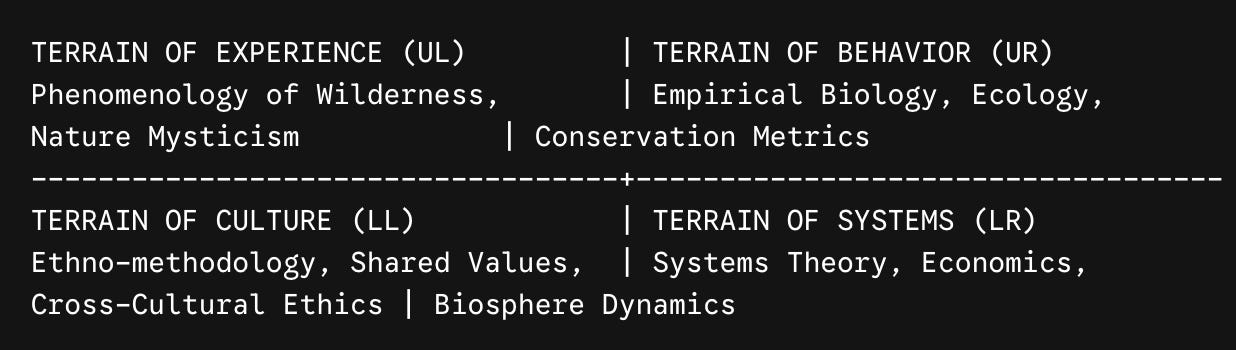
Contemporary Systems Ecology and Environmental Virtue Ethics
Environmental virtue ethics has, at the same time, begun integrating systems ecology concepts to move beyond traditional anthropocentric limits. Nancy Rourke outlines how concepts from systems ecology can be mapped directly onto virtue theory, creating a more resilient moral framework.
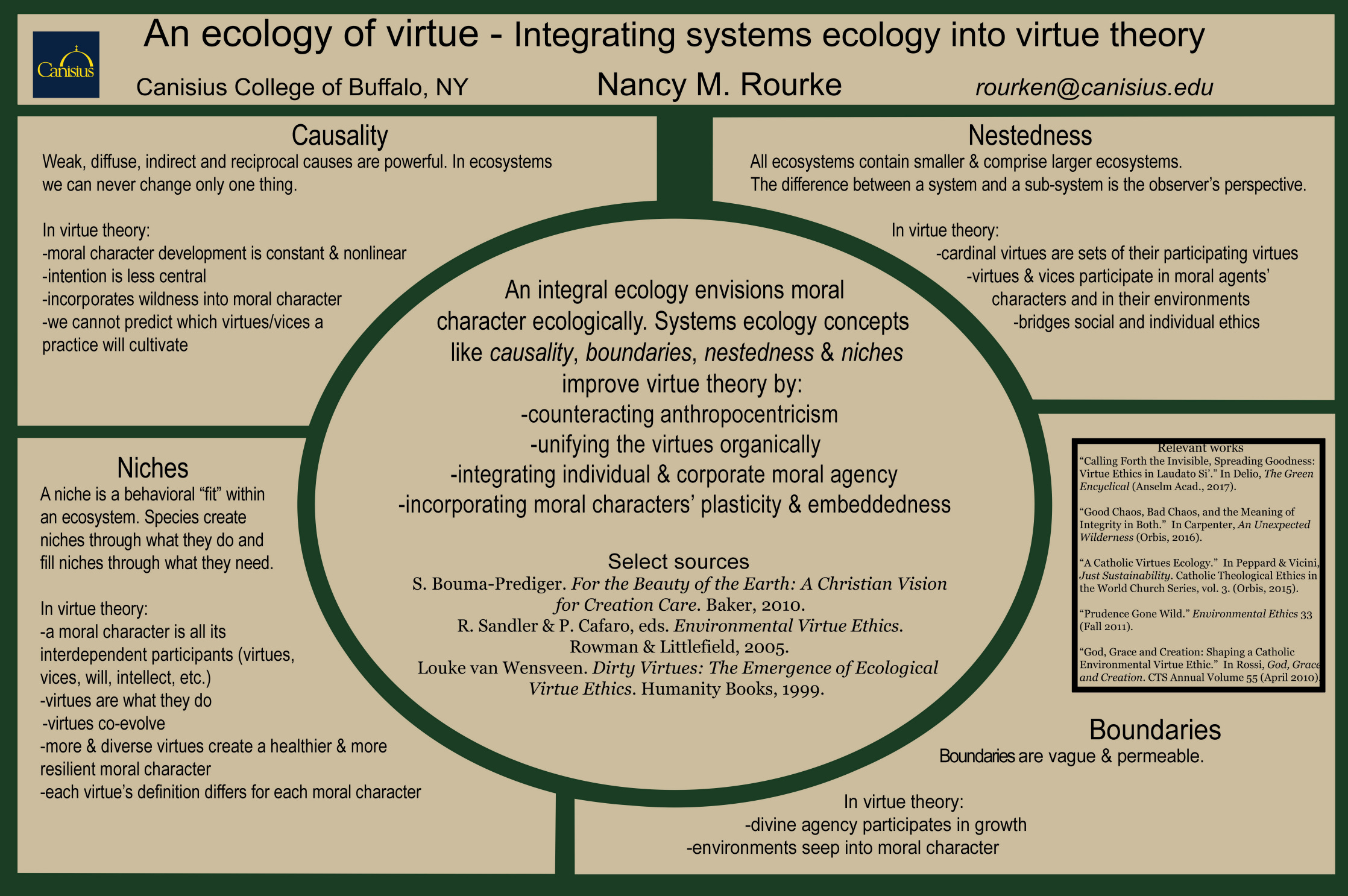
Imagine a moral framework where character development is as constant, non-linear, and adaptable as an ecosystem. Rourke’s framework brings this vision to life by mirroring the nested, complex interactions of ecosystems.
Think of a community where both ethical values and systems ecology converge: this approach resonates in contemporary theological and secular discourses. For example, Pope Francis’s encyclical Laudato Si’ vividly champions an “integral ecology,” urging us to join the “cry of the earth and the cry of the poor” in a united moral and ecological community.
The Operational Principles of Integral Altruism
The emerging movement of Integral Altruism seeks to harmonize large-scale, analytical approaches to global problems with the cultivation of character at the local level. While it is grounded in both systems-level analysis of the metacrisis and the psychological depth of virtue ethics, Integral Altruism stands out for five core operational principles:
Full-Spectrum Knowing: Integrating rigorous, rational analysis with other valuable ways of knowing, such as embodied intuition, ecological rationality, and contemplative practices.
Moving at the Speed of Wisdom: Balancing action-oriented drive with patience, collective discernment, and a focus on healthy processes over narrow goals.
Decoupling and Recoupling: Alternating between analytical problem isolation and complex systems contextualization, recognizing the deep entanglement of global challenges.
Practicing Fractal Altruism: Balancing global, scope-sensitive ambitions with intrinsic local values, such as friendship, family, beauty, and the sacred.
Inner Work, Outer Change: Embracing psychological, emotional, and spiritual development to ground altruistic action in compassion and abundance rather than guilt.
By transitioning from the abstract, high-sacrifice metrics of pure utilitarianism to a model that values the practitioner’s developmental state, Integral Altruism offers a sustainable template for systemic change. This perspective sets the stage for considering how such principles influence economic and political transitions.
Economic and Political Transitions: The Case for Subsidiarity
On a practical, structural level, both thinkers highlight the inadequacy of modern global systems and the nation-state. These systems foster a politics of bargaining, controlled by elites of wealth and power. MacIntyre contends that the nation-state and rapacious capitalism inherently undermine the common good, thereby destroying citizens’ moral formation.
To counter this, he advocates for an intensely deliberative politics of local community, epitomized by the Greek polis or the Benedictine monastery.
Imagine how your life might change if you were guaranteed unconditional material security. In this context, contemporary theorists suggest that policy tools such as Universal Basic Income (UBI) can serve as a transition. By guaranteeing unconditional material security, basic income can help decouple individual survival from ecologically destructive economic growth.
I think it would take much more than domesticating economic gimmicks. Institutions worldwide need to be dismantled and rebuilt. No one has a way to make that happen, and ordinary people, in general, have no idea why we desperately need radical change.
With a good foundation, citizens can escape the grip of global capitalism. Local, self-sustaining communities of virtuous practical reasoners can then begin to form.
Tragically, the ruling class has centuries of experience suppressing dissent and independent movements. Uncle Sam Inc. has dismantled organizations in countries worldwide that sought autonomy. Refusing to serve as a wealth resource for the American elite often results in facing severe violence.
We can only reach these goals by directly addressing the challenges posed by Global Modern Techno-Industrial Fossil-Fueled Financialized Neoliberal Capitalism, Overshoot, and the Limits to Growth.
This brings us to a crucial question: how do we inspire a cultural revolution across societies—a discussion for another time.
Core Principles for a Resilient and Flourishing Future
Envisioning a future in which humanity survives the current polycrisis and becomes a loving custodian of a complex, evolving planet of living systems requires a systematic integration of Ken Wilber’s vertical development with Alasdair MacIntyre’s biological and communal realism. To bring these perspectives together cohesively, the following four core principles provide an actionable framework to guide this integration.
1. Acknowledged Animality and Biological Vulnerability
Humanity must ground its ethical systems in our biological vulnerability, as expressed in MacIntyre’s Dependent Rational Animals. This means rejecting the modern illusion of an autonomous, disembodied self. To flourish, humans must recognize they are still animal selves with animal identities. We are embedded in physical systems with limits and rhythms. These cannot be artificially accelerated, deconstructed, or engineered without producing severe pathologies. Biological realism anchors us and keeps Wilberian theory’s aspirations from turning into escapism that ignores our physical limits, or another shiny new system of thought that Uncle Sam Inc. can book for corporate training sessions.
2. Multi-Perspectival, Vertically Aware Governance
To resolve conflicts in a pluralistic world, global governance must use an AQAL-informed, multi-perspectival approach. This approach acknowledges that cultures and groups operate from different developmental stages of consciousness. Each stage has valid internal standards of value. Instead of imposing a modern, technocratic, uniform approach, sustainable agreements should come from what Wilber calls “vision-logic.” This planetary view coordinates diverse perspectives without destroying unique cultures.
3. Localist Virtue Cultivation and Subsidiarity
MacIntyre’s political theory urges humanity to resist centralized, impersonal forces such as global capitalism and large nation-states, which promote mere bargaining and result in multipolar traps. True moral growth and resilience arise in intense, deliberative local communities. These are communities built on giving and receiving. They must follow the principle of subsidiarity. Economic and social needs (like wage guarantees, farming, and restoration) are best managed locally. In these face-to-face practices, people develop the virtues of courage, temperance, and justice essential for the common good.
We will not build communities of change by watching YouTube, listening to podcasts, or reading and writing blog posts that feed the Ouroboros-Machine, the omnicidal heat engine of Imperialist, rapacious extractive global capitalism. Again, I say, knowing what’s what isn’t enough. We need to create change together where it counts most, and tell our leaders to keep their hands off our world.
4. Decentered Custodial Stewardship of Great Nature
Humanity must develop a speculative ecological consciousness that avoids romantic ideas of Nature as just a backdrop for humans. We should see the universe as vast and independent, with real objects beyond our full grasp. This view creates deep humility. It shifts our role from dominant managers to loving caretakers of an autonomous reality. In this mindset, humans act knowing we are a temporary, complex part of planetary evolution. We have the duty to care for the rich living systems we are part of.
I hope these thoughts inspire you to explore the many great ideas and proposals at our fingertips. The Internet, Social Media, and AI will not last forever. One day, we won’t have the energy/power to support our current way of life. Let’s educate ourselves and prepare ourselves for a simpler world where genuine smiles and loving relationships are valued more than electric sports cars, gadgets, status, and public spectacles.
In a subsequent post, I will explain what I mean by ‘this thing of ours,’ how it works, and why we should not support it. That post will be my last post in my series, Capitalist Cabinet of Curiosities.
Take a deep breath and be thankful.
A very comprehensive over-view of the poly/meta crisis and the possible responses to it.
But please find another unique description of the situation in the "21st century"
http://beezone.com/current/index-102.html
Two related references
http://fearnomore.vision/human/what-man-represents
http://beezone.com/lopezisland/lopezislanddescription.html